
A scientist spends months getting a qPCR assay right. The scientist selects specific primers and a qPCR master mix, dials in the cycling conditions, and validates the assay against samples that matter. That work has real value, and it’s tied to a specific qPCR instrument sitting in a specific lab.
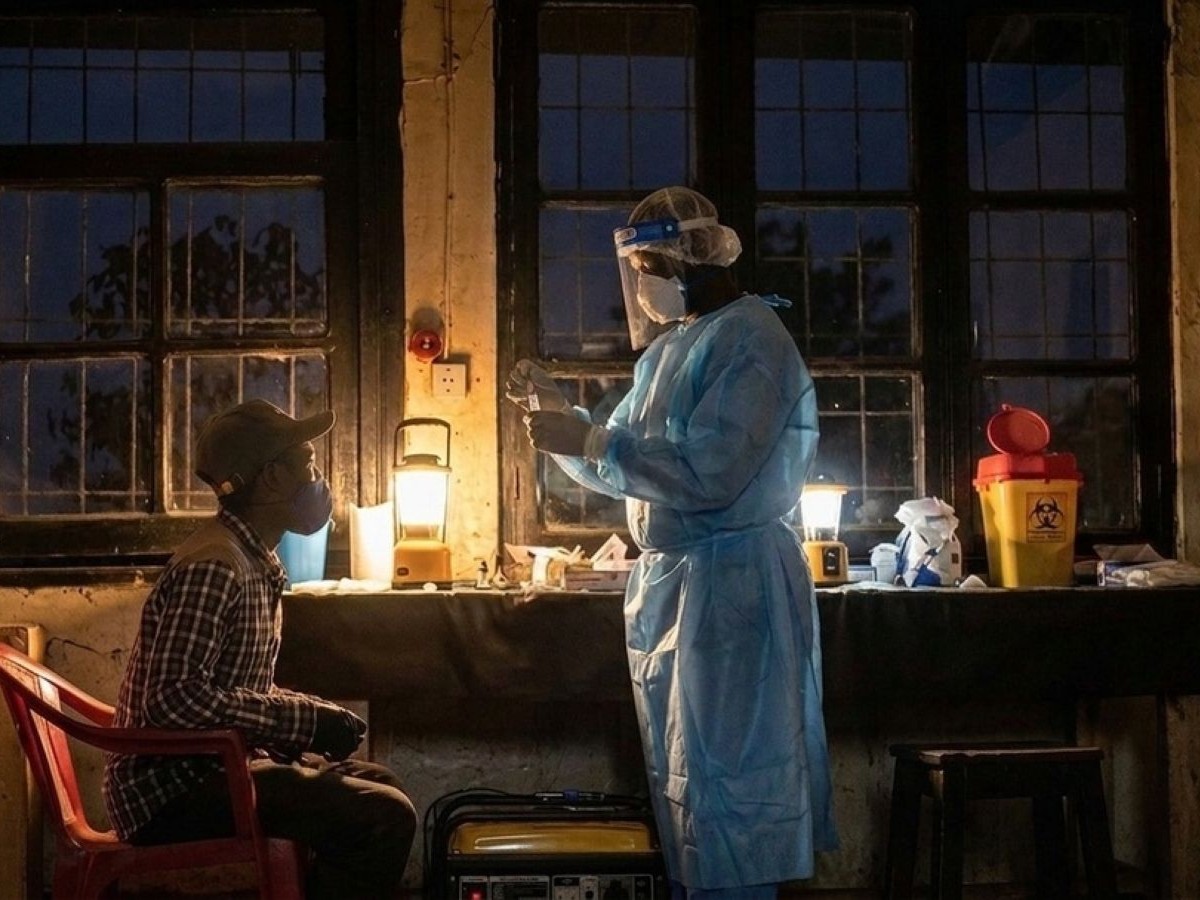
Then the question that started the project shows up somewhere else. A contamination event on a production line. A crop disease that needs checking in the field, not three days later when a courier reaches a lab. A disease outbreak that needs an answer at the point of exposure, as outlined by the World Health Organization for TB testing. The qPCR assay already exists. What’s missing is a way to run it where the sample actually is.
Why This Gap Matters
The usual fix is to treat field testing as a separate problem. A dedicated field kit often uses proprietary chemistry rather than the qPCR assay already validated.
qPCR Assay Optimisation
That means re-optimising primers and probes for a new qPCR master mix and re-establishing limits of detection (LoD). Confidence in the results must also be rebuilt, not because the science changed, but because the qPCR instrument did.
Duplicate Assay Problem
The real cost isn’t just bench time. It’s the delay between sample and answer. It also means running two versions of “the same” qPCR assay that were never validated against each other.
How the Mic qPCR Cycler Removes the Gap
Mic sidesteps that problem by not asking for a new chemistry in the first place. It’s an open real-time PCR cycler that runs the qPCR master mix, primers, and probes a lab has already validated. The same reagents already sitting in the freezer can be used without repackaging them into a vendor-specific kit. Moving from bench to field becomes a matter of moving the qPCR instrument, not rebuilding the assay.
Built to Stay Reliable in the Field
That leaves the genuinely different part of field testing: staying reliable outside a controlled lab environment. This is where Mic’s engineering choices earn their keep.
Magnetic Induction Cycling an Advantage for In-the-filed
Mic heats using magnetic induction, the same principle as an induction cooktop, so only the lightweight aluminium rotor gets hot, nothing else. The rotor transfers heat rapidly to the spinning tubes and cools via fan-forced air. This allows up to 35 complete cycles in under 25 minutes. A thermal sensor embedded directly in the spinning rotor measures tube temperature without drifting over time.
Fixed Optics
The optical system uses a fixed path with no moving parts, so it never needs alignment or calibration. Together, these features let the Mic qPCR cycler arrive somewhere new and produce a trustworthy result without recalibration or realignment. It requires no warm-up routine and can run on mains power or a portable inverter.

No calibration step between transport and first run
What a Field-Ready Cycler Enables
None of this asks a scientist to trust a new qPCR chemistry. It asks them to trust the same qPCR assay on an instrument that goes where the work is. That opens up more than a single use case.
Possible In-the-field Uses
Environmental monitoring can happen at the water source. Food safety checks can happen on the production floor. Biosecurity and crop testing can happen where the sample is collected. Disease outbreak testing can happen where the outbreak is, and pathogen surveillance can run continuously in the field rather than in occasional batches sent back to a central lab, all with a result the same day rather than after a shipping delay.
Field Deployment is Already Happening
Agricultural Testing
This isn’t hypothetical. Researchers have developed a quantitative allele-specific qPCR assay on the Mic qPCR cycler to quantify a fungicide-resistant allele in wheat crops directly in the field. The kind of crop testing that only works if the result comes back before the growing window closes. On the biosecurity side, Dr Campbell Costello, “The Flying Vet,” covers an outback territory larger than Texas out of his plane and vehicle, using Mic qPCR cycler and the Myra liquid handling system to test for animal diseases, including biosecurity threats like Japanese encephalitis, without sending samples to a lab hundreds of kilometres away.
Human Health Diagnostics
A schistosomiasis control team has built Mic qPCR cycler into field workflows across public health facilities in Africa, where the lack of a calibration or servicing step keeps it reliable through unstable power and limited infrastructure. A mobile RT-qPCR assay on Mic has differentiated the four Dengue virus serotypes, supporting timely intervention. During COVID-19, the Mic qPCR cycler’s small footprint and ability to link multiple units let diagnostics scale up for high demand or back down for smaller regional outbreaks.
The pattern across all of it is the same: the assay doesn’t change, only where it can run does.

Mic set up outside a traditional lab environment
FAQs
Does the Mic qPCR cycler require a proprietary assay chemistry?
No. Mic is an open real-time PCR instrument, so it runs standard qPCR master mixes, primers, and probes rather than a locked-in kit format.
Can I use the same qPCR assay I’ve already validated in the lab?
Yes. If your assay already runs on a standard open-format qPCR cycler, you can run it on Mic without redesigning it.
Does the Mic qPCR cycler need to be calibrated?
No. Mic works straight out of the box without a calibration step before a run. A thermal sensor embedded directly in the spinning rotor measures tube temperature without drifting over time.
Why is Mic’s optical system considered robust for field use?
Mic uses bolted-in optics with a fixed optical path and no moving parts. As a result, the optics never need alignment or calibration. The system also does not require reference dyes or crosstalk compensation to stay accurate.
Is the Mic qPCR cycler suitable for use outside a lab?
Yes. Mic is rated for an operating temperature range of 18–30°C and 20–80% humidity. In addition, it can run from a pure sine wave inverter (360 W minimum) as well as standard AC power, so it can operate in most non-lab field settings. (see Bulletin 9: Mic in the Field)
What kind of detection chemistries does Mic support?
Both intercalating dyes (SYBR Green I, EvaGreen, and other HRM dyes) and probe-based conjugated labels (FAM, HEX, VIC, ROX, Cy5, and others) across Mic’s optical channels. While the 4-channel model covers the full range; the 2-channel option suits users running SYBR Green without multiplexing. (see Bulletin 12: Mic Dye Detection)
Do I need to revalidate my assay to run it on the Mic qPCR cycler?
Moving to a new qPCR instrument generally warrants a confirmation run against known samples, even when the chemistry itself is unchanged, good practice rather than a Mic-specific requirement.
Can I automate qPCR assay set-up on Mic in the field?
Yes, the Myra liquid handling system is built to travel alongside Mic. It weighs under 10kg with a footprint of less than 1,700 cm2, and minimal calibration. As a result, Mic and Myra run from the same user interface as a continuous workflow – the same combination that already runs in remote settings like Northern Australia.