
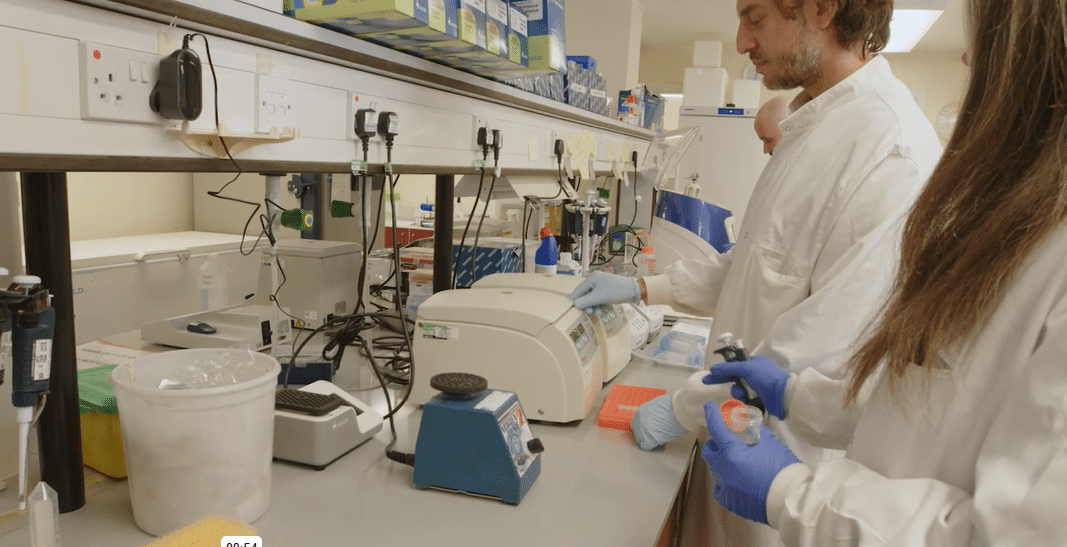
The Natural History Museum in London is home to a research team led by Dr Bonnie Morgan, a molecular parasitologist working to improve diagnostics for schistosomiasis. By using the Mic real-time PCR cycler, her team is advancing efforts to detect infections earlier and support global programs aimed at reducing transmission of this neglected tropical disease, which affects more than 240 million people worldwide.
Who is Dr Bonnie Morgan?
Dr Bonnie Morgan is a molecular parasitologist based at the Natural History Museum in London. Her research focuses on refining diagnostics for schistosomiasis, a parasitic disease spread through freshwater snails and common across sub-Saharan Africa.
Schistosomiasis remains a major health challenge in regions with limited sanitation. Many cases go undetected because parasite levels can be very low and traditional diagnostic tools aren’t sensitive enough. This makes elimination efforts extremely difficult and underscores the need for more advanced molecular approaches.
Dr Morgan’s team aims to deliver accurate, field-ready diagnostic methods to public health laboratories across Africa. By adapting molecular assays for portable use, they are helping local teams detect infections earlier, guide targeted treatment and strengthen long-term disease control strategies.
Why Advanced Diagnostics Matter
Traditional Microscopy Methods Lack Sensitivity
Microscopy has long been used to diagnose schistosomiasis. While it’s still an important tool, it often struggles to detect low-intensity infections. These cases are becoming more common as disease control efforts progress, yet they are also the most likely to be missed.
Utilisation of Molecular Diagnostics
Molecular diagnostics provide researchers the sensitivity they need to detect small amounts of parasite DNA. This helps public health teams map where infections are occurring, understand how transmission patterns are changing and target treatment programs more effectively.
Early & Precise Identification
Finding infections early reduces the risk of reinfection within households and communities. With more precise data, health teams can act faster and monitor progress towards long-term elimination goals with greater confidence.
How Bio Molecular Systems Makes It Possible
For Dr Morgan and her team, reliable molecular results start with the Mic real-time PCR cycler. Mic delivers laboratory-level accuracy in a compact instrument that can be used confidently in both field and lab settings. You can learn more about the instrument on our Mic PCR machine page.
Many facilities involved in schistosomiasis control operate with limited infrastructure, unstable electricity and minimal equipment. Mic is designed with these realities in mind. It is small, robust and simple to set up, which allows researchers to bring molecular diagnostics into places where they would not normally be available.
By incorporating Mic into their workflow, the team can carry out reliable qPCR testing wherever their work takes them.
What is the Mic Real-Time PCR Cycler?
Designed for Portability and Precision
Mic is built for movement. It is lightweight, takes up very little bench space and completes runs in under 40 minutes. Despite its size, it maintains a high degree of precision, making it suitable for both laboratory and field use.
Because Mic does not require calibration or servicing, it is well-suited to locations where technical support may not be easily accessible.
Reliable and Efficient
With a compact footprint and low weight, the system is designed for easy transport and use in field-based workflows. It completes accurate qPCR runs in less than 40 minutes, helping teams work quickly and consistently. Since it does not require calibration or servicing, it remains reliable even in unpredictable or remote conditions.
Click Here to Learn More About Mic’s Software
How Dr Morgan’s Team Uses Mic
Dr Morgan’s team uses the Mic PCR machine throughout their workflow to generate accurate molecular data in both laboratory and field settings.
Adapting Advanced Assays for Field Work
The team is currently adapting the ITSQ PCR assay so it runs efficiently on the Mic platform. They begin by testing the assay under controlled laboratory conditions, where they can confirm performance, accuracy and sensitivity. Once validated, the workflow is introduced into public health laboratories across Africa.
This stepwise approach ensures the assay is reliable and reproducible before being used in environments where conditions can vary from day to day. By establishing robustness early, the team can support laboratories that rely on consistent results for decision-making and disease surveillance.
Transforming Detection and Treatment
Early work in regions such as Anar shows infection levels dropping to around 10%. While this is encouraging, declining infection rates make detection more challenging. Low-level infections are easy to miss without sensitive diagnostics.
Mic helps the team identify these low-level cases that traditional methods may overlook. Detecting infections earlier supports faster, more targeted treatment and provides clearer insights for public health programs working towards long-term elimination goals.
Advancing Global Health with Bio Molecular Systems
Bio Molecular Systems supports researchers, clinicians and public health laboratories with instruments designed for accuracy, speed and dependable performance in any environment. BMS has also developed the Mic IVD, a purpose-built in vitro diagnostic version of the Mic designed for clinical workflows that require validated, reliable and regulatory-ready qPCR performance.
Alongside Mic, BMS offers the Myra Liquid Handler, a portable automated pipetting robot that improves workflow consistency and reduces manual handling variability.
For teams seeking a fully integrated molecular workflow, Myra Plus combines Mic and Myra into a single unit. This creates a seamless process from sample preparation to qPCR analysis, designed for efficiency and ease of use in both laboratory and field applications.
Want to Learn More? Book a Demo
If you would like to see how Mic or Myra Plus can support your workflow, you can book a demo or send an enquiry. Our team will walk you through the instruments, answer technical questions and help you understand how they can fit into your work.