
Two modular, high-performance pipette heads are available from BMS for the Myra and Myra9 automated liquid handling systems.
Myra Liquid Handling System
Myra Liquid Handling System
Myra Pipette Heads

Whether your workflow demands versatility, precision handling, or specialized tasks, each pipette head can be easily interchanged without the need for a technician, minimizing downtime and simplifying operation. Built with a strong focus on both precision and accuracy, these pipette heads are designed to fulfill specific application needs with maximum efficiency, ensuring reliable liquid handling performance across a wide range of laboratory workflows.
The Myra Pipette Types
Modular high-performance pipette heads. Interchangeable with a simple swap-and-go design.

50 µL Single Channel
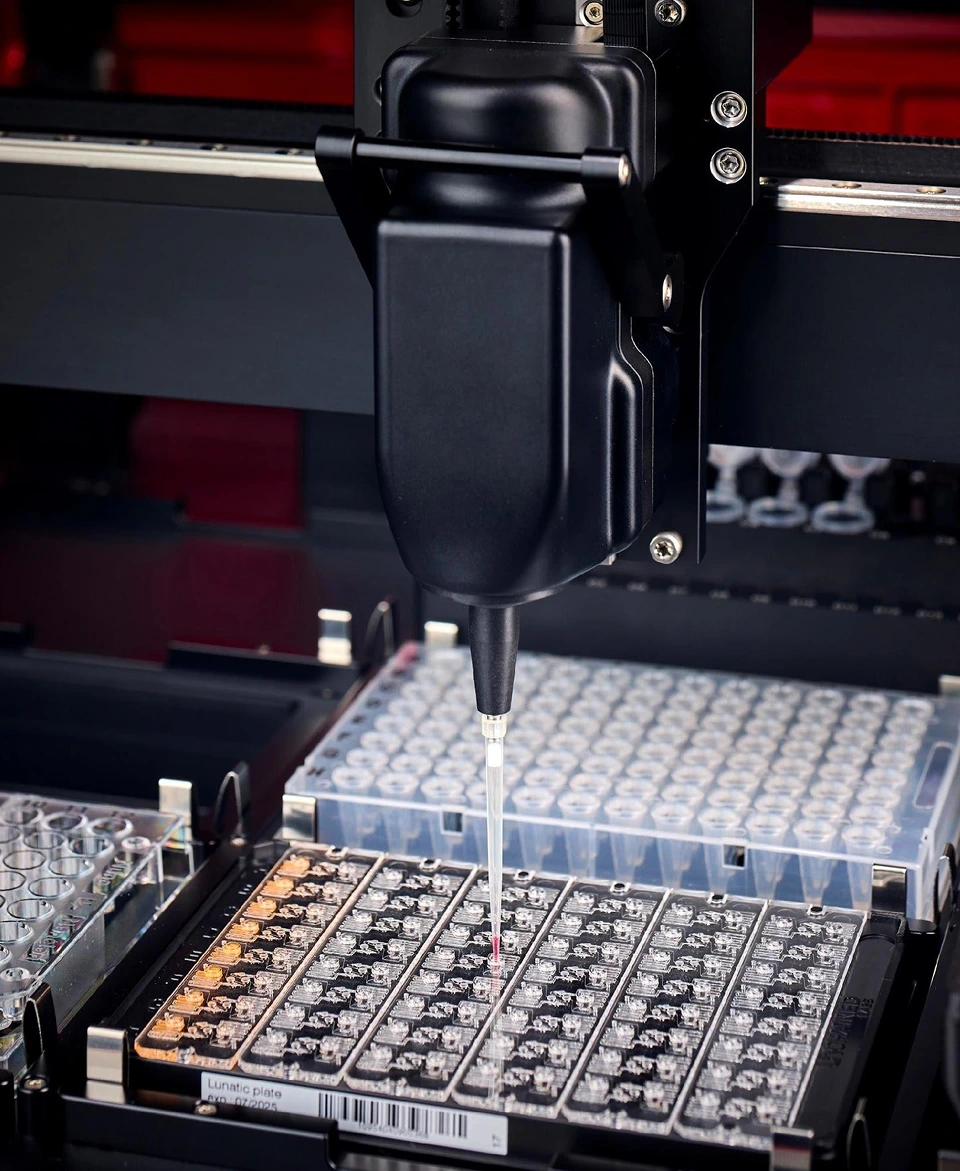
Single channel pipette head ensuring a high level of accuracy and precision. Pressure sensing level detection with single or multi-dispense strategies.
Volume Range
1 – 50 µL
Accuracy
5% @ 1 µL | 1% @ 5 µL | 1% @ 50 µL
Precision
≤ 10% CV @ 1 µL | 1% CV @ 5 µL | 0.5% CV @ 50 µL
from $4,000 USD

50 µL 4- Channel
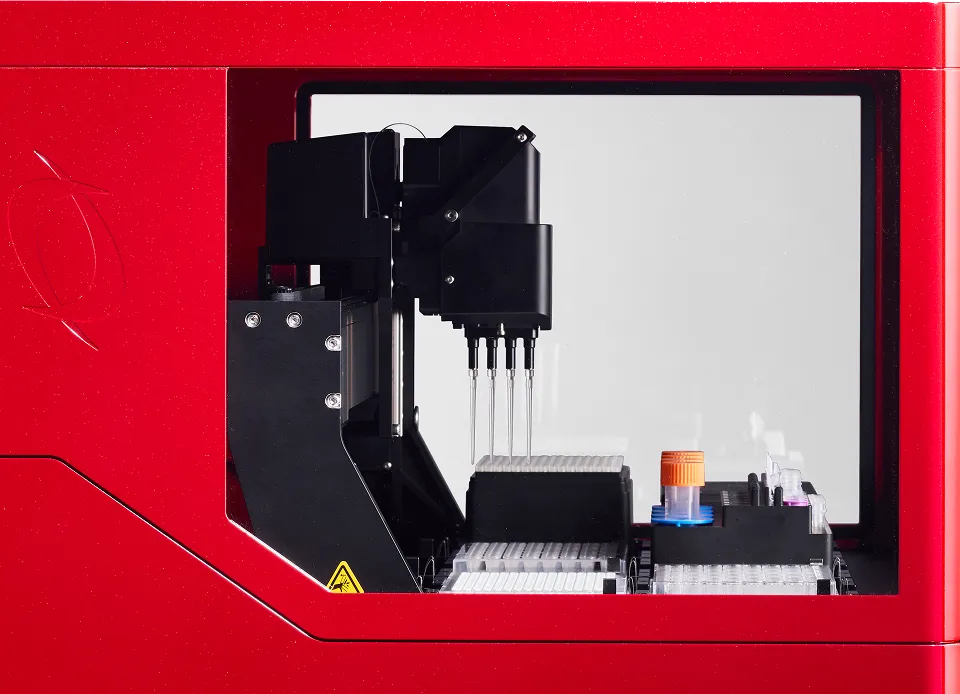
Multiply the speed of your transfers with 4-channels. Use one, two, three or four channels at a time, maintaining the same performance as a single channel.
Volume Range
1 – 50 µL
Accuracy
5% @ 1 µL | 2.5% @ 5 µL | 1% @ 50 µL
Precision
≤ 10% CV @ 1 µL | 1% CV @ 5 µL | 0.5% CV @ 50 µL
from $6,000 USD
Ready to Process More Samples in Less Time with Myra?
For efficient liquid handling that scales with your workflow, get in contact with our BMS team today.
Benefits
Design
Myra uses advanced pressure-based liquid level sensing to monitor aspiration and dispense steps in real time — no conductive tips required. It detects challenging liquid behaviors, including bubbly, viscous, and volatile samples, and helps prevent errors to improve confidence.
This feeds into MyraSense®, part of the MyraIntelligence® AI engine, which dynamically adjusts pipetting based on liquid type, height, and movement. The result is adaptive performance with enhanced run safety.
Housed in a compact, lightweight design, Myra delivers consistent precision, effortless head swapping without a technician, and integrated tip ejection with closed waste handling for cleaner, safer workflows.
Speed
With options like a 4-channel pipette head and multi-dispense, the Myra portable liquid handler enables fast, efficient workflows across a range of applications. Typical run times include transferring 5 µL in 96 wells in just 4 minutes, dispensing across 384 wells in 6 minutes, and completing qPCR setup for 96 samples in 18 minutes.
More complex workflows, such as ONT Rapid Barcoding for NGS and Illumina DNA Prep, can be completed in under an hour or around two hours, respectively. Whether using single- or multi-channel configurations, Myra delivers speed without compromising precision.
Performance
Myra’s interchangeable pipette heads enable high-accuracy, low-volume liquid handling with consistent sub-microliter performance. Dispensing 1–50 µL with 5% accuracy at 1 µL, Myra supports workflows that manual pipetting and many benchtop robots struggle to execute reliably.
Ideal for qPCR, NGS library prep, serial dilutions, and enzyme assays, Myra delivers tight CVs, reproducible dispensing, and stable performance across 96-, 384-, and high-density formats. This ensures cleaner data, more reliable normalization, and better outcomes — especially with precious samples or sensitive analyses.
Trusted across genomics, screening, and proteomics, Myra improves reproducibility, reduces human error, and increases confidence in results.
Calibration
Myra pipette heads are calibrated in accordance with ISO 8655-6:2002, ensuring accurate and reliable low-volume liquid handling. Each head stores its own calibration data, making them fully interchangeable between Myra instruments — simply swap and go.
Calibration is designed to be simple and downtime-free. No technician or on-site service is required — just remove the pipette head, send it to BMS, and continue working with a spare. Once returned, reattach the calibrated head and resume your workflow immediately.
Tips
Myra uses 384-well, 50 µL filtered pipette tips designed for precise, low-volume dispensing, delivering reliable performance below 10 µL for applications like qPCR, NGS, enzyme assays, and MALDI-TOF MS plate loading. Their narrow, straight geometry provides excellent positional accuracy, enabling reliable access to small apertures in 384-well and high-density formats. Optional 20 µL super straight tips further improve clearance and precision for 1536-well plates.
The 384-tip format maximizes deck space, supporting higher-throughput workflows without increasing the instrument’s footprint. Integrated aerosol filters reduce carryover, while intelligent tip reuse minimizes waste and cost without compromising contamination control.
Precision Tip Alignment Tool (PTAT)
The Precision Tip Alignment Tool (PTAT) is designed to improve multichannel tip loading accuracy and consistency across the Myra 4-channel pipette system. Integrated with the 6x Reservoir Loading Block, PTAT applies controlled force during tip pickup to ensure each tip is seated correctly every time.
This reduces variability caused by higher-resistance tip racks, where simultaneous loading across multiple channels can lead to inconsistent attachment or incomplete seating. By improving alignment and seating consistency, PTAT helps support more reliable liquid handling performance and reproducible results.
The system also enables reservoirs to be loaded as independent plate objects, supports reservoirs spanning multiple deck sockets, and includes a dedicated tube row for single-channel workflows. Fully integrated into the Myra workflow, PTAT improves pipetting reliability without adding complexity to setup or operation.
Myra Vector-Drive®
Myra Vector-Drive® is an advanced drive technology engineered to optimise pipetting performance across the Myra liquid handling system. By intelligently reducing the force required for tip pickup, it enables smoother and more reliable tip engagement across every channel.
This improves consistency during multichannel operation, particularly in higher-throughput workflows where uneven tip loading can affect accuracy and repeatability. The reduced mechanical force also lowers operational noise, helping create a quieter and more comfortable laboratory environment.
Designed to support efficient multichannel performance without compromising precision, Myra Vector-Drive enhances consistency and user confidence across demanding liquid handling applications.
Myra Dynamic-Retract®
Myra Dynamic-Retract® is an intelligent, pressure-based feature available on Myra, Myra9, and Myra+ that prevents aspiration errors at the bottom of wells.
It detects tip sealing or restricted flow by drawing a small test volume and monitoring pressure. If needed, the system automatically retracts in small increments (up to 2 mm) until normal flow is restored. This ensures accurate liquid handling, even with low volumes, labware variation, or multichannel use.


Intelligent Mixing: Optimised Automatically
Reproducible results start with consistent reagent preparation. Myra integrates advanced, automation-optimised mixing strategies that are designed to suit different volumes, labware formats, and reagent types. Rather than relying on a single generic approach, Myra can automatically select the most appropriate mixing strategy based on the transfer volume and consumable type, ensuring optimal performance with minimal user input.
Vortex Mixing
High-speed circular pipette motion, combined with synchronised vertical movement, delivers rapid and highly consistent mixing. Ideal for bead suspensions and applications that require strong homogenisation. It can mix 5 mL master mix tubes in under 30 seconds.
Advanced Mixing
Coordinated pipette and Z-axis motion at multiple heights within the well ensures thorough, controlled mixing, which is well-suited to viscous reagents and critical reaction components.
Simple Mixing
Targeted aspirate/dispense cycles provide efficient mixing for smaller volumes and routine reagent preparation without over-agitation.
For specialised workflows, fully customisable mixing parameters are also available, giving experienced users complete control where required.
Non-Contact
Dispensing
Myra supports true non-contact dispensing, allowing liquids to be delivered without the pipette tip touching the destination surface. By precisely controlling aspiration and dispense behavior to prevent bubble formation, liquids are released cleanly and consistently — reducing the risk of cross-contamination and preserving sample integrity.


Intelligent Foil Piercing
Foil-sealed plates are widely used in molecular workflows, particularly for pre-aliquoted reagents such as NGS index primers and other critical reaction components. Myra’s pipette heads incorporate a controlled foil piercing routine designed to open sealed wells cleanly, safely, and consistently. Rather than puncturing in a single motion, the tip performs multiple controlled perforations across the well surface before sliding back to create a defined opening. This approach delivers a smooth access point while maintaining system stability.
Multi-Dispense. Faster Transfers, Same Precision.
Myra’s multi-dispense capability accelerates repetitive liquid transfers without compromising accuracy, even at very low volumes. By aspirating once and delivering multiple precise dispenses in sequence, Myra significantly reduces cycle time while maintaining volumetric consistency from the first well to the last. This functionality is fully supported across compatible pipette heads, including four-channel configurations, enabling efficient parallel processing without sacrificing precision.

Optimised for Real Laboratory
Workflows
Multi-dispense is particularly valuable in applications where uniform distribution across many wells is critical, including:
- qPCR reaction setup
- NGS library preparation workflows
- Bead clean-up reagent distribution
- Serial dilution and standard curve preparation
- Enzyme and master mix dispensing
Efficient by Design
By reducing repeated aspiration cycles, multi-dispensing shortens run time while maintaining consistency. It also minimises unnecessary mechanical movement and supports efficient tip usage during repetitive distribution steps.
Frequently Asked Questions
Why does Myra Dynamic-Retract® matter?
Myra Dynamic-Retract® improves liquid handling accuracy and reliability by automatically detecting and correcting aspiration issues at the bottom of wells, one of the most common challenges in automated pipetting.
It helps to:
- Improve aspiration accuracy
- Prevent tip sealing errors
- Compensate for minor height calibration variation
- Enhance multichannel consistency
- Increase protocol robustness across different labware types
By using pressure-based sensing and small test aspirations, the system adjusts tip height in real time to restore proper flow. This is especially important for low-volume work and with the 4-channel head, where it ensures all channels aspirate evenly, eliminating slow or restricted flow caused by one tip sitting too low.
Does intelligent mixing make a difference?
Yes. Different reagents require different levels of agitation — enzymes, bead suspensions, buffers, and master mixes all behave differently, and treating them the same can introduce variability.
Myra’s intelligent mixing strategies are designed to adapt accordingly, helping to:
- Maintain reagent homogeneity
- Improve transfer accuracy
- Reduce well-to-well variability
- Protect sensitive reagents from overmixing
- Ensure consistent performance across plates
The result is a more reliable reaction setup, improved reproducibility, and greater confidence in your data.
What is the benefit of true non-contact pipetting?
True non-contact pipetting allows liquids to be dispensed without the tip touching the destination surface, reducing contamination risk, and enabling more efficient workflows. This is especially valuable in applications like NGS library prep, PCR clean-up, and bead-based purification, where consistency and sample integrity are critical.
By avoiding surface contact, Myra enables controlled tip reuse during defined steps, improving efficiency without compromising results. This helps to:
- Protect pellet integrity during clean-up
- Reduce contamination risk between wells
- Improve reproducibility across plates
- Minimize unnecessary tip consumption
- Lower consumable costs in high-throughput workflows
The result is cleaner separations, greater efficiency, and increased confidence in downstream data.
Why do both speed and precision need to be achieved?
High-throughput workflows demand speed, but never at the expense of accuracy. Without precision, faster processing can lead to variability and compromised data quality.
Features like multi-dispense enable:
- Faster plate preparation
- Reliable low-volume performance
- Uniform distribution across wells
- Increased throughput with maintained data integrity
The result is efficient liquid handling that scales with your workflow while preserving the precision your experiments depend on.
Why is intelligent foil piercing important in molecular workflows?
Foil-sealed plates are widely used in molecular workflows, including NGS library preparation, index primer handling, PCR setup, and pre-sealed assays. Clean, controlled access to these wells is critical for maintaining sample integrity and workflow reliability.
Myra’s intelligent foil piercing uses a controlled, multi-step perforation process to open wells safely and consistently, minimizing disruption during access. Unlike sudden punctures, this structured approach reduces pressure differentials between the well and the surrounding environment, helping to limit aerosol formation and lower contamination risk in high-sensitivity applications.
The controlled opening routine also prevents the pipette tip from catching on partially torn foil, avoiding plate movement or disruption during retraction.
In addition, Myra’s pressure-sensing system is designed to accurately recognize foil interaction, preventing false pressure-trigger events during piercing. This ensures reliable aspiration performance immediately after the well is opened and supports consistent reagent access.
The result is safer sealed-plate handling and greater confidence in high-sensitivity molecular workflows.
What pipette heads are available for Myra?
Myra pipette heads currently include a 50 µL single-channel and 50 µL 4-channel option. This gives users flexibility to choose the right configuration for low-volume precision work, routine transfers, or faster multi-channel workflows.
How accurate and precise are Myra pipette heads at low volumes?
Myra pipette heads deliver exceptional low-volume performance, dispensing 1–50 µL with high precision — including 5% accuracy at 1 µL. This level of control enables reliable execution of sensitive workflows that manual pipetting and many benchtop robots struggle to perform consistently.
Combined with tight CVs and stable liquid handling behavior, Myra ensures reproducible results across applications such as qPCR, NGS, and enzyme assays. To understand why this matters for your workflows, learn more about pipetting accuracy and precision.
What is the difference between the 50 µL single-channel and 50 µL 4-channel pipette heads?
The main difference between the 50 µL single-channel and 50 µL 4-channel pipette heads is throughput. The single-channel head is ideal for flexible, low-volume transfers and workflows that require precise, one-at-a-time pipetting. In contrast, the 4-channel head enables parallel transfers across multiple wells, significantly increasing speed and efficiency.
Both heads support a 1–50 µL volume range, but the 4-channel option is better suited for users looking to scale up workflows and improve productivity without moving to a larger platform. Learn more about high-throughput liquid handling.
Do Myra pipette heads need technician calibration after swapping?
No. Myra pipette heads are designed to simplify calibration management. Each head stores its calibration data, so swapping heads does not require a technician or reconfiguration.
When recalibration is needed, the pipette head can be removed and serviced independently, while a spare head is used to keep workflows running without interruption.
Where Can I Learn More?
To learn more about Myra pipette heads and how they can support your workflows, you can request a demo or get in touch with our team.

Upgrade to High-Throughput Pipetting with Myra
Process more samples faster — without sacrificing precision. Get in contact with our BMS team today.