
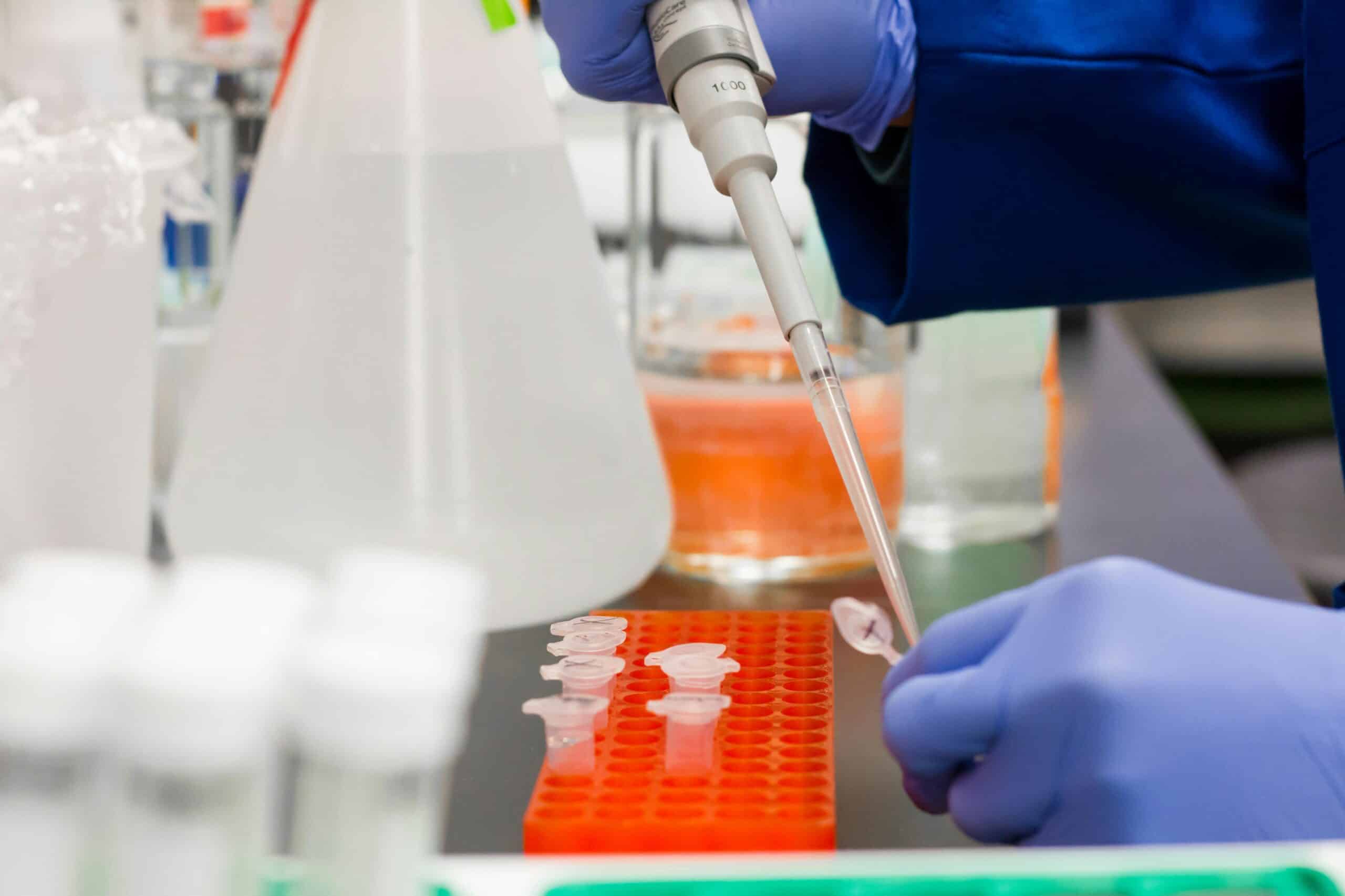
Accurate and precise pipetting is essential for high-quality molecular workflows. Small volume differences can influence reaction setup, data reliability, and overall workflow confidence. This article outlines the importance of accurate pipetting, explains how accuracy and precision shape experimental outcomes, and describes how Myra helps laboratories maintain strong pipetting performance across everyday tasks.
Understanding Accuracy and Precision in Pipetting
Many laboratories treat the terms “accurate pipetting” vs “precise pipetting” as interchangeable, which is why the concepts are often misunderstood. In practice, they describe two different aspects of volume control. Accuracy reflects how close a dispense is to the intended amount, while precision relates to the consistency of repeated measurements. Recognizing the distinction between the two terms helps teams improve pipetting accuracy and precision across routine assays.
What is Accurate Pipetting?
Accurate pipetting refers to how closely a pipette dispenses the intended volume. High accuracy means the measured volume aligns with the target value. Systematic errors such as incorrect calibration, worn seals, poor technique, inappropriate consumables, or unsuitable tips can reduce accuracy. Achieving correct target volumes is essential because even a small deviation can shift reagent ratios, affect reaction kinetics, and reduce reproducibility across experiments.
What is Precise Pipetting?
Precise pipetting describes how consistently a pipette dispenses the same volume across repeated actions. A pipette can be accurate but not precise, or precise but not accurate. Handling technique, tip fit, environmental variables, and ergonomic factors all influence precision. Good precision ensures lower variability between replicates, which supports stronger statistical confidence.
Why Accurate Pipetting Is Important
Accurate pipetting is fundamental in molecular workflows because small volume discrepancies can alter reaction conditions. Poor accuracy can lead to failed experiments, skewed quantification, altered qPCR loads, and unreliable downstream analysis. When exploring why accurate pipetting is important, consider that even slight changes in reagent concentration can influence amplification curves, enzyme performance, NGS library balance, and sample interpretation.
Why Precision Matters Just as Much
Precision is equally crucial because inconsistent dispensing creates variation between replicates. Even with correct mean volumes, wide variation reduces confidence in data interpretation. Common sources of imprecision include inconsistent speed when drawing or dispensing, changes in pipetting angle, variable immersion depth, differences between tip types, and inappropriate consumable or tube selection, which can alter aspiration profiles and disrupt repeatability. Addressing precision strengthens reproducibility, which supports quality control across assays.
Challenges of Manual Pipetting
Manual pipetting is an error-prone process because human variability is difficult to control. Fatigue, time pressure, repetitive strain, and environmental fluctuations influence both accuracy and precision. Even experienced technicians encounter inconsistency during high-throughput tasks. Training improves technique, but it cannot fully eliminate user-based variation. These factors explain why many labs explore automated solutions for stronger pipetting accuracy and precision.
Read More: What is a Pippetting System and the Advantage of Automatic Pipetting
How Bio Molecular Systems is Maximising Accuracy and Precision
Myra:
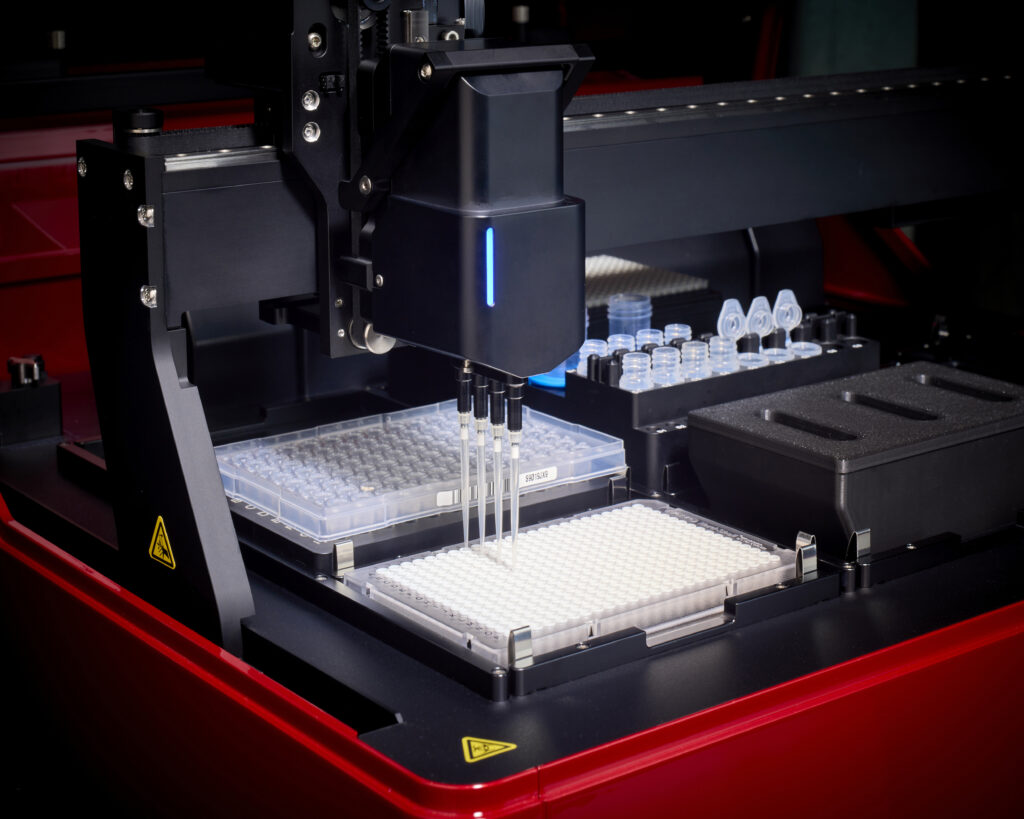
The Myra liquid handler supports accurate pipetting by using a pressure-based approach designed to maintain controlled volume delivery. As a portable liquid handler, it delivers consistent performance even in labs with limited bench space. Its calibration-focused design reduces systematic error, while its intuitive interface helps maintain precise pipetting across runs. As part of BMS’s automated liquid handling systems, Myra improves workflow quality by reducing user-dependent variability in common molecular tasks.
Myra Plus:
The importance of accuracy and precision in pipetting becomes especially clear in workflows that depend on stable reagent setup. Myra Plus unifies qPCR preparation, automated liquid handling, and AI-driven oversight in one platform built to deliver both accurate and precise pipetting. Its integrated design minimizes handling differences, supports consistent reagent setup, and improves workflow stability. By combining these functions, Myra Plus gives laboratories a controlled, automation-ready environment for volume-sensitive molecular applications.
See Myra’s Capabilities Yourself With A Demo
To explore how Myra and Myra Plus support strong pipetting accuracy and precision across molecular workflows, laboratories can request a hands-on demonstration. Teams can submit an enquiry to discuss workflow requirements or book a demo to evaluate real performance in their environment.