
As laboratories take on higher sample volumes and face increasingly complex workflows, the demand for automation is greater than ever. While automated liquid handling provides improved reproducibility, increased throughput, and better precision, not all research teams have the space or infrastructure in their laboratories for a large robotic platform.
Traditional automation equipment is bulky and requires dedicated work areas or complex laboratory reconfiguration. These systems can be difficult to install in smaller research environments, shared facilities, or labs where bench space is limited.
A benchtop liquid handler provides a functional alternative. Designed to integrate into existing scientific environments, it helps teams improve efficiency by automating repetitive pipetting without requiring extensive bench space.
Why Lab Space Matters When Choosing Automation
Because multiple users share lab benches, they typically become crowded with instruments, consumables, and essential equipment, leaving little room for anything else. Adding more space is rarely an easy or affordable option, so every new piece of equipment has to be justified.
Beyond their size and footprint, large automation platforms produce other challenges. They may need areas of the lab to be reconfigured, specialized installation may be required, and changes to existing workflows will have to be made so staff have safe access to operate the system. These constraints can also affect how well teams are able to navigate the space and function in a busy lab.
In such environments, the question is not if automation will lead to increased productivity and reproducibility, but whether it can be implemented without disruption. Benchtop automated liquid handling equipment can be integrated into existing workspaces more conveniently, allowing teams to leverage automation in the available space.
What Is a Benchtop Liquid Handler?
A benchtop liquid handler is an automated system designed to automate repetitive pipetting workflows such as reagent dispensing, serial dilutions, and plate preparation. It enables laboratories to carry out these workflows more accurately and consistently than manual pipetting alone.
Unlike larger automation platforms that require extensive laboratory space or dedicated work areas, benchtop liquid handling automation does the same job without using a large amount of space. It can also easily integrate into existing laboratory environments, allowing researchers to keep automation close to their existing instruments and workflows without major changes to their operations.
The Benefits of Benchtop Liquid Handling Automation
For many labs, benchtop liquid handling automation provides the right balance between performance, accessibility, and space efficiency. Other key benefits of benchtop automated liquid handling:
Saves lab space
Benchtop liquid handlers are designed to sit on a standard laboratory bench. This saves valuable lab space for other important equipment and daily activities.
Reduces the need for a dedicated room
Most laboratories do not have the space to dedicate a whole room or separate work area to automation. A benchtop liquid handler can be incorporated into an existing laboratory layout with minimal modifications to infrastructure or to the layout of the laboratory.
Keeps automated workflows close to current instruments and staff
Linking automation to existing laboratory equipment maintains the efficiency of workflows. Researchers can move between sample preparation, liquid handling, and downstream analysis without having to move work to a separate automation area.
More reliable pipetting
Repetitive pipetting steps and protocols can be programmed into benchtop automated liquid handling to help reduce the variability that can occur with manual handling. This enables more reproducible sample preparation and consistency across experiments.
Removes manual handling in repetitive workflows
Tasks such as reagent dispensing, serial dilutions, and plate setup can consume significant laboratory time when performed manually. Automating these repetitive processes allows researchers to spend more time on experimental design, analysis, and higher-value activities.
Makes automation easier to introduce into smaller or shared labs
For laboratories with limited bench availability or shared workspaces, benchtop liquid handling automation does the same processes as a larger system without the need for additional infrastructure.
When a Large Liquid Handling System May Not Be Practical
Large liquid handling systems play an important role in laboratories with high-throughput screening programs and complex integrated workflows. However, laboratories with limited space often need a solution that delivers automation without requiring the footprint or infrastructure of a larger platform.
Smaller research laboratories, shared facilities, teaching spaces, and translational research environments must have automation that fits within their existing bench space rather than requiring dedicated infrastructure. Laboratories with limited bench availability may also prefer equipment that can integrate alongside their existing equipment instead of requiring a dedicated space.
Ultimately, it comes down to workflow and throughput goals, and the amount of space that is available in the laboratory. A benchtop liquid handler provides a clever way for teams to automate mundane liquid handling without disrupting established workflows.
How Myra Fits Into Existing Lab Workflows
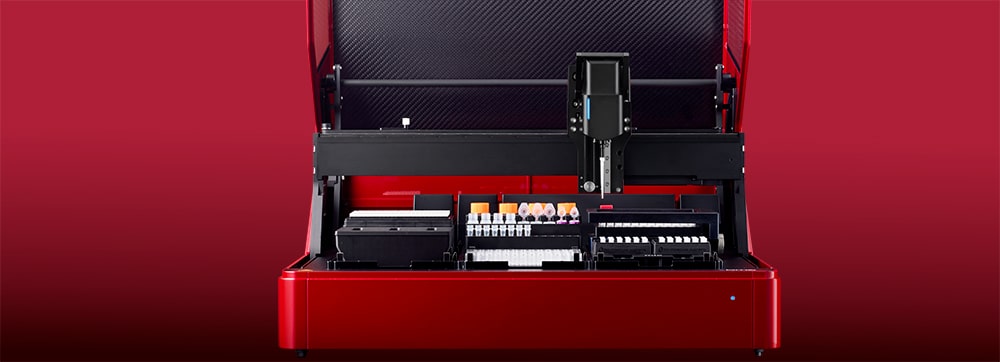
Myra from Bio Molecular Systems is a benchtop liquid handler. Myra provides accurate automated pipetting in laboratory applications, reducing the reliance on manual pipetting for routine workflows and improving the consistency of repetitive liquid transfer tasks.
The bench-friendly design allows researchers to integrate automation into existing bench layouts without sacrificing access to core instruments for daily operations. The smaller footprint also means that there is no need for a dedicated room or significant reconfiguration of the laboratory.
For teams seeking to streamline sample preparation and repetitive liquid handling tasks, Myra offers an accessible solution that complements existing laboratory operations. Learn more about how lab workflow automation can improve efficiency across your laboratory.
Space-Saving Automation Without Sacrificing Workflow Capability
A benchtop liquid handler does not mean compromising workflow capability. Myra is designed for automated liquid handling workflows where precision, consistency, and repeatability are essential.
The system’s versatile liquid handling makes it ideal for routine molecular biology and life science applications, including real-time PCR setup, NGS library preparation, NGS normalization and pooling, and magnetic bead clean-up. Myra automates the repetitive pipetting steps often associated with these workflows, reducing the need for manual effort in sample preparation and improving consistency across the board.
For labs with limited space, Myra makes it possible to add automation to existing workflows without requiring a dedicated robotic platform. Researchers can access accurate liquid handling across multiple applications while preserving valuable bench space.
Choosing a Compact Liquid Handler For a Benchtop Lab Setup
Selecting benchtop liquid handling automation involves more than comparing specifications.
- Laboratories also need to consider:
- How a compact liquid handler can support automation
- How it will fit within available bench space
- How it will integrate with existing equipment
- And how it will support day-to-day workflows
These considerations will also help teams to select a solution that provides the optimal mix of automation capability, space efficiency, and workflow integration.
Make Better Use of Your Bench Space With Myra
Laboratories should not have to choose between automation and bench space. A benchtop liquid handler offers a smarter way to improve pipetting consistency, reduce repetitive manual handling, and streamline workflows while fitting into existing laboratory environments.
Myra is designed for space-conscious research teams, providing a precise automated piece of pipetting equipment that fits easily into day-to-day laboratory operations.
If you want to increase efficiency or extend your automation capabilities, discover how Myra’s applications can support a broad range of molecular biology workflows.
To discuss your laboratory’s requirements, submit an enquiry or request a demo.