
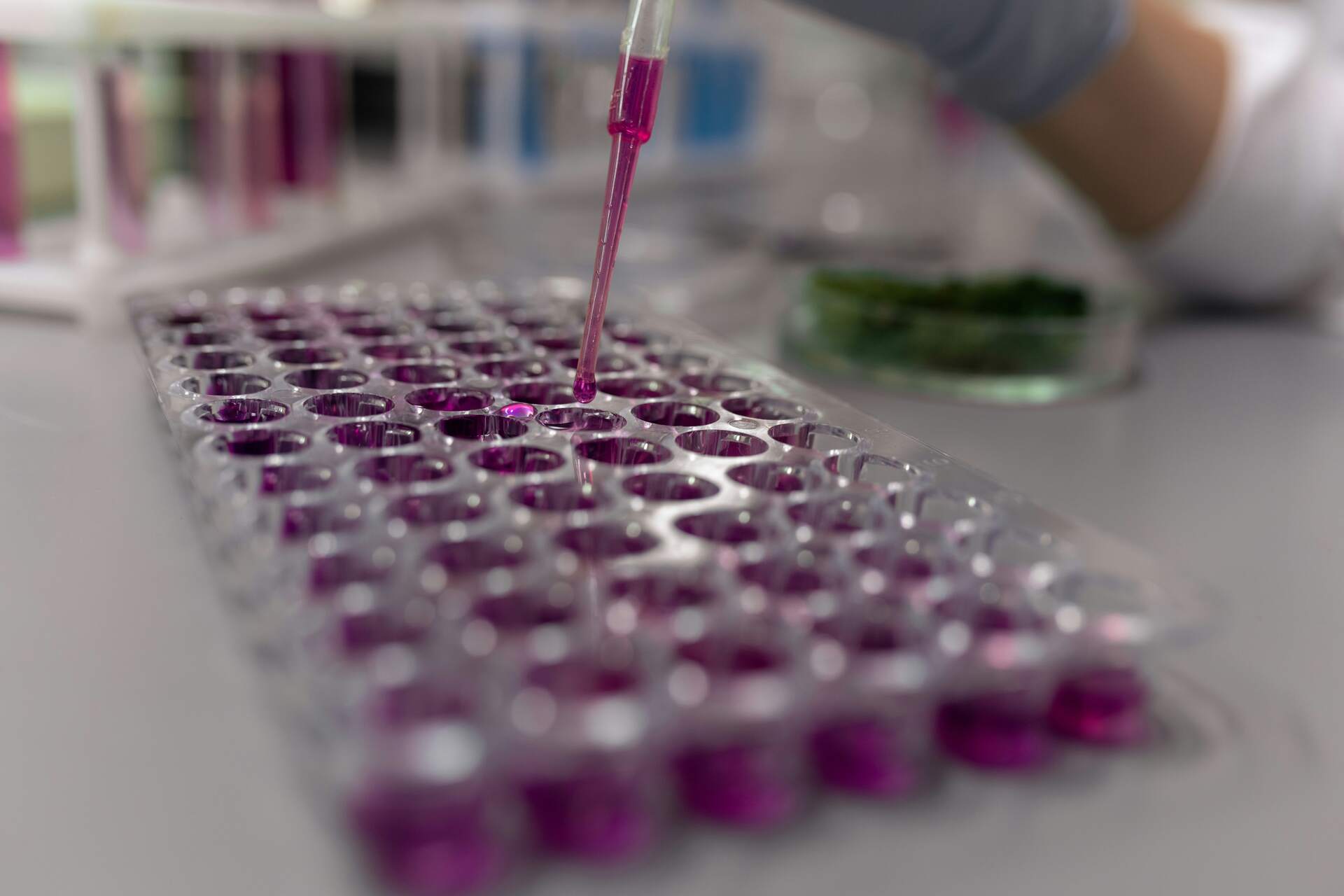
In life sciences, sample preparation is arguably one of the most important steps in any workflow. Common applications include performing qPCR, next-generation sequencing (NGS), proteomics, cell culture analysis, and drug discovery research. With each of these, the quality of your samples is crucial for reliable results. Even the most advanced analytical instruments require accurate and stable sample preparation to function properly.
Small inconsistencies during sample preparation, such as variations in pipetting volumes, handling techniques, or workflow execution, can introduce errors that compromise results and lead to costly repeat experiments.
As research teams face increasing pressure to process more samples and deliver faster results while maintaining high standards, many laboratories are turning to automated sample preparation solutions. By reducing manual intervention, automation improves reproducibility and minimizes the risk of errors.
This article explores the benefits of automating sample preparation in life sciences and shows how modern liquid handling technologies are helping labs improve efficiency and consistency.
Related Article: What is Laboratory Automation
What Is Sample Preparation?
Sample preparation is the process of preparing biological, chemical, or research materials for analysis and testing. In life science laboratories, sample preparation encompasses a wide range of routine yet critical tasks. These cover pipetting liquids, mixing samples and reagents, aliquoting samples into smaller volumes, performing dilutions, adding reaction components, and transferring liquids between plates, tubes, or other labware. Depending on the application, it may also involve normalization, purification, bead clean-up, or library preparation workflows.
Sample preparation serves as the bridge between collecting a sample and generating meaningful data by ensuring that materials are handled and processed in a standardized way. Although these tasks are fundamental to many experimental protocols, they can be labor-intensive when performed manually, and are highly sensitive to human error. Even small variations in technique or volume transfer can introduce inconsistencies that affect downstream analysis.
Because sample preparation directly influences the quality of experimental data, laboratories must place a strong emphasis on the execution, accuracy, consistency, and reproducibility throughout the process for reliable results. As sample volumes increase and workflows become more complex, many labs are adopting automation to help standardize these tasks, reducing the manual effort required and improving overall workflow reliability.
Why Sample Preparation Is Important
The quality of sample preparation has a direct impact on the data that follows. No matter how advanced, results can only be as reliable as the samples used to generate them.
Even small inconsistencies during manual sample preparation can negatively influence experimental outcomes. Variations in pipetting volumes, reagent addition, mixing efficiency, or sample transfer can introduce errors that affect data accuracy and make results more difficult to reproduce.
Accurate sample preparation reduces variability between experiments and is essential for reproducibility, allowing researchers to generate reliable data across different runs, operators, and laboratories.
Sample preparation also plays a key role in maintaining sample integrity and reducing contamination risk. Repeated manual handling can introduce cross-contamination or sample mix-ups, which can compromise downstream analysis and lead to costly repeat work.
Ultimately, effective sample preparation supports the accuracy, reproducibility, and reliability of experimental data while helping laboratories operate more efficiently and with greater confidence.
The Challenges Of Manual Sample Preparation
As sample numbers increase and protocols become more complex, manual sample preparation processes can place growing pressure on researchers and laboratory teams.
One of the most common challenges is the repetitive nature of sample preparation. Labs can perform hundreds of steps involving pipetting, mixing, aliquoting, reagent addition, dilution, and plate transfers every day. While each step may be straightforward on its own, the cumulative effort can be time-consuming and physically demanding.
Manual handling can also introduce variation. Differences in pipetting technique, timing, mixing consistency, or workflow interpretation can affect results, particularly when multiple operators are involved.
Fatigue from long or repetitive workflows can increase the likelihood of mistakes, especially when teams are working under time pressure or managing several tasks at once. Errors such as incorrect volumes, missed wells, sample mix-ups, or inconsistent reagent addition can be difficult to identify until later in the workflow.
As throughput requirements grow, laboratories may have to process more samples but not have the time or the staff to do it. Manual sample preparation can also make it difficult to maintain the same level of accuracy and traceability across larger workloads.
These challenges do not detract from the effectiveness of manual sample preparation. Instead, they highlight why so many laboratories are seeking automated sample preparation as a way to reduce repetitive handling while enabling consistency and ensuring sample preparation is easier to scale.
What Is Automated Sample Preparation?
Automated sample preparation uses technology to perform repetitive or high-precision sample handling tasks, such as pipetting, the addition of reagents, dilution, normalization, mixing, aliquoting, and transferring between plates and tubes with less manual intervention. Rather than requiring researchers to do each step by hand, automated systems perform these routine processes in a standardized way which is much more efficient.
Automated liquid handling systems are also designed to perform the precise pipetting and sample transfer steps that are fundamental in many laboratory workflows and essential for generating reliable results.
For example, the Myra liquid handling system can automate complex protocols while maintaining consistent volume transfers and workflow execution across large numbers of samples. This reduces the manual workload of laboratory staff while ensuring that sample preparation is carried out to the same standard every time.
As laboratories process more samples and implement more complex workflows, automated liquid handling for sample preparation has become a viable means of improving throughput and enabling reproducibility.
Key Benefits Of Automating Life Science Sample Preparation
Greater Accuracy And Reproducibility
By executing the same protocol every time, automation completes consistent sample preparation across experiments, operators, and batches. This is particularly important in sensitive life science workflows such as qPCR, next-generation sequencing (NGS), proteomics, and drug discovery, where even minor variations can impact data. The result is improved reproducibility across the laboratory and greater confidence in the data.
Less Hands-On Time For Researchers
Automating sample preparation reduces the time researchers spend on repetitive manual tasks such as pipetting, reagent addition, sample transfers, and plate setup. The automation of routine handling steps frees up scientists and technicians to focus on higher-value activities such as experimental design, data processing, method development, troubleshooting, and interpretation of results. This also gives teams more time to develop scientific insights and focus on the work that spurs innovation and discovery, rather than on performing repetitive processes.
Reduced Risk Of Human Error
Manual sample preparation often includes hundreds or even thousands of individual pipetting and sample transfer steps. Laboratory professionals are highly skilled, but repetitive and complex workflows can increase the chances of mistakes, such as incorrect volumes, missed wells, inconsistent reagent addition, or sample mix-ups. Automated liquid handlers dispense, transfer, and mix liquids accurately according to predefined parameters, reducing these risks by standardizing critical liquid handling steps and running protocols consistently from beginning to end. This is particularly valuable in high-throughput and precision-sensitive workflows where accuracy and reproducibility are essential.
Easier Workflow Scaling
As research demands grow, laboratories are often required to process more samples and run increasingly complex protocols, all within tighter timeframes. Scaling these workflows manually can be difficult, with additional hands-on labor or longer working hours needed to keep pace with demand. Automation provides a practical way to scale sample preparation without relying solely on additional personnel. Automated liquid handling systems can process larger numbers of samples consistently and efficiently, helping laboratories maintain accuracy and reproducibility as throughput increases. High-throughput liquid handler robots provide the control needed where large sample volumes and repetitive processing tasks can quickly overwhelm manual workflows.
Better Use Of Lab Space
Laboratory space is often a valuable and limited resource. While automation offers significant efficiency benefits, many modern laboratories are looking for solutions that can be integrated into existing environments without requiring major infrastructure changes or dedicated automation facilities. The Myra portable liquid handler has a small footprint and is designed to fit comfortably on standard lab benches for day-to-day laboratory operations.
How Liquid Handling Supports Automated Sample Preparation
Life science laboratories frequently use liquid handling systems for a range of applications. Automated liquid handling systems standardize routine steps by performing liquid transfers according to predefined protocols. This provides less variation between runs and operators, increasing the efficiency and reproducibility of the workflow. The benefits are more apparent in complex or high-throughput workflows requiring hundreds or thousands of liquid handling steps. By combining precision pipetting with repeatable workflow execution, automated liquid handling systems help laboratories improve data quality, increase productivity, and create more reliable sample preparation processes regardless of workload or throughput requirements.
Where Myra Fits In The Sample Preparation Workflow
Myra is designed to automate many of the core liquid handling tasks in sample prep workflows. Myra allows labs to perform critical steps like assay setup, PCR preparation, sample normalization, reagent dispensing, serial dilutions, pooling, and NGS library preparation more accurately and efficiently. Smart workflow automation combined with precise pipetting reduces the manual work involved in repetitive sample handling, freeing up researchers so they spend less time on routine tasks and more time on scientific discovery.
Improve Sample Preparation With Myra
Sample preparation is a foundational part of life science research, influencing the accuracy, reproducibility, and reliability of every result that follows. As workflows become more complex and sample volumes continue to grow, laboratories are increasingly looking for ways to improve consistency and reduce manual workload so they can operate more efficiently without compromising quality.
Automated sample preparation helps to address these challenges by standardizing critical liquid handling steps and minimizing variability, freeing researchers from repetitive manual tasks. The result is a more streamlined workflow and greater confidence in experimental outcomes.
Myra is built to facilitate modern life science sample preparation workflows with accurate liquid handling, smart automation, and user-friendly software. That way, your lab can increase efficiency and still deliver the accuracy and reproducibility your work depends on.
Want to see Myra working in real life? Book a demo.
Or for more information on how automated sample preparation can benefit your research, contact us today