
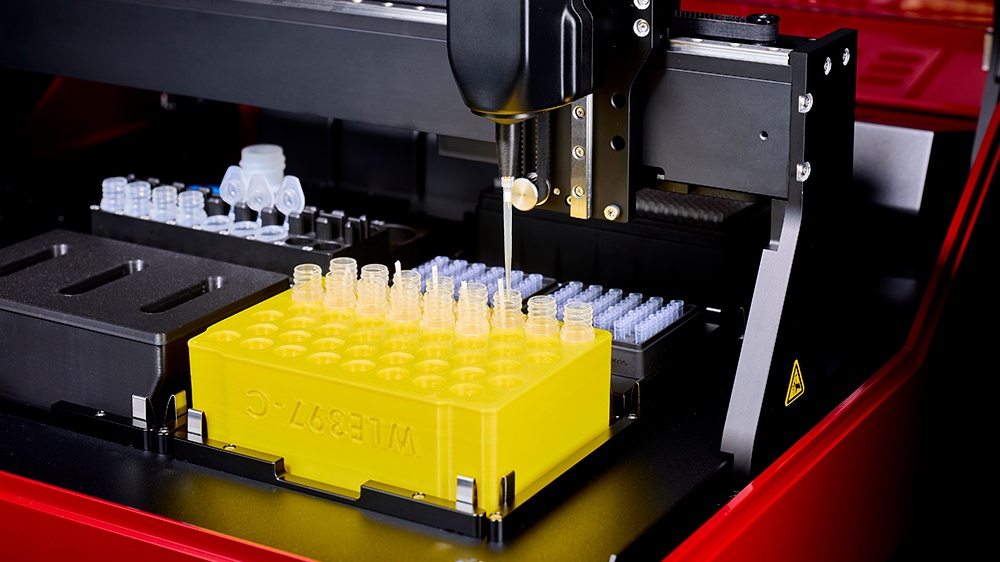
A liquid handler built around one application becomes restrictive when research priorities change. New assays and protocols place different demands on automation, leaving laboratories to adapt the existing system or introduce another instrument. A flexible platform supports different applications on the same instrument as those requirements change.
What Flexible Liquid Handling Really Means
Flexible liquid handling means configuring one system for different workflows and protocols rather than restricting automation to a single application. A versatile liquid handling platform lets scientists adapt automation as research requirements change.
Flexible vs. Specialized: Understanding the Difference
A specialized liquid handler focuses on a defined application or workflow. That approach works when the task remains consistent, but it becomes restrictive when a laboratory introduces new protocols.
Automated liquid handling systems with configurable workflows allow scientists to use the same instrument across compatible applications.
Why Adaptability Matters as Lab Needs Change
Many laboratories begin with one core application before expanding into areas such as NGS library preparation or molecular diagnostics. New assay formats also change the transfers, volumes, or labware required during sample preparation.
A configurable platform gives scientists more options for adapting automation as those requirements evolve.
Challenges of a Single-Purpose Liquid Handler
A flexible liquid handling platform applies the same automation hardware across different compatible workflows. Scientists configure the protocol around the application rather than relying on separate dedicated instruments for every type of work.
One System, Many Workflows
Automated pipetting supports workflows across genomics and molecular diagnostics. In drug discovery, protocols also vary according to the experimental process. A configurable platform accommodates these differences without requiring dedicated automation for each compatible application.
Custom Scripting for Application-Specific Needs
Some protocols require more control than a standard workflow provides. Python-based scripting allows scientists to configure application-specific processes when more complex automation is required.
Flexible Liquid Handling Capability With Myra and Myra9
Bio Molecular Systems applies this approach through Myra and Myra9. Myra combines automated pipetting with configurable software for molecular biology workflows, while Myra9 provides additional deck space for laboratories working with larger or parallel setups.
Myra's Design Supports a Wide Range of Applications
Labs commonly start with one core molecular biology workflow, real-time PCR, for example, and later add NGS library preparation, NGS quantification and pooling, bead cleanup, or kinase assays as their research expands. Because these workflows run on the same configurable platform, adding one doesn’t mean including a new instrument. BMS covers the broader role of automation across these workflows in our high-throughput liquid handling guide.
Reconfigurable Software for Changing Needs
As protocol requirements change, scientists need to adjust or build new workflows rather than replace hardware. MyraScript™, Myra’s Python-based scripting layer, supports these changes for application-specific processes.
Labs that combine liquid handling with qPCR have an additional option. Myra Plus integrates Myra with the Mic qPCR cycler in one system.
Myra9 for Labs Running Multiple Applications in Parallel
Labs running multiple workflows in parallel need more deck space without losing the benefits of a compact system. Myra9 adds deck space for exactly this case, while Myra remains available as a compact liquid handler for labs prioritizing bench space over deck capacity.
Why Versatility Matters More Than Ever in Modern Labs
A versatile liquid handling platform gives laboratories more options when scientific priorities change. Research groups may manage multiple projects in a single location, while diagnostic laboratories introduce new assays as testing requirements evolve.
Supporting Research, Diagnostics, and Drug Discovery Alike
Research, diagnostic, and drug discovery workflows place different requirements on transfer volumes, labware, and protocol structure. Configurable automation allows each compatible workflow to be set up according to its experimental requirements.
See Where Myra's Flexible Platform Fits Your Work
The right automation depends on the protocol, required labware, and the way a laboratory expects its work to develop. Myra provides configurable liquid handling for scientists working across different molecular biology applications.
Explore Myra’s applications to see where the platform fits different scientific workflows.