
Iran and Serbia: Toxoplasma gondii
A quantitative PCR using the MIC Real-Time Cycler was used to validate an acute Toxoplasma gondii assay. 12.3% of 276 pregnant women in Salmas, North West of Iran, were identified as positive for acute T. gondii.
China, Australia and USA: Host-derived extracellular exosomes act as a defence mechanism during Haemonchus contortus parasitic infections.
RNA-sequencing of transcriptome responses in resistant and susceptible sheep flocks reveal 38 genes differentially expressed. The expression of these genes was further confirmed using qRT-PCR, performed on the MIC Real-Time Cycler.
USA, China & Canada: Zika virus polyclonal antibodies
Quantification of ZIKV infection, using the MIC Real-Time Cycler, on non-treated and treated hamsters with SAB-155 antibody revealed sufficient protection against the virus, even 4.5 days post infection.
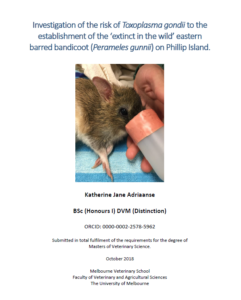
Australia: Epidemiology of Toxoplasma gondii and the risk factor associated for Eastern Barred Bandicoot relocation on Phillip Island.
A qPCR, using MIC Real-Time Cycler, was used to study the prevalence of Toxoplasma gondii in feral cats and rabbits on Phillip Island to understand the associated risks for the introduction of the Eastern Barred Bandicoot.
Germany and Tunisia: Brucella in cerebrospinal fluid
A rapid real-time PCR assays using a Magnetic Induction Cycler (MIC) was established and validated for Brucella. Cerebrospinal fluid were obtained from patients diagnosed with encephalitis and meningitis in Tunisia hospitals between 2012-2017.
Australia: Multiplex qPCR for liver fluke (Fasciola hepatica) and intermediate snail host (Austropeplea tomentosa)
The design of a multiplex qPCR assay using MIC has allowed a highly sensitive and specific detection of Fasciola hepatica and its intermediate snail host, Austropeplea tomentosa, in water samples.
Korea: Protective effect of hydrolysates from seahorse on Atherosclerosis
After determining the most promising hydrolysate for an anti-atherosclerotic agent using seahorse, a qPCR using MIC was conducted to determine the effects of the hydrolysate on the expression of apoptosis-related genes.
Iraq: micro-RNA levels in follicular fluid indicate embryo quality
Real time PCR using MIC was used to determine if there is an association between miRNA-320 levels in follicular fluid and embryo quality in IVF-ISCI procedures. The miRNA levels in differing grades of embryo qualities was compared and an association was found with higher grade embryos containing more miRNA-320.
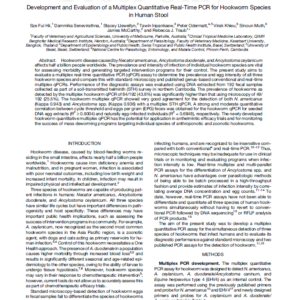
Australia, Thailand, Switzerland, Cambodia: Multiplex qPCR for Hookworms
The authors developed a multiplex qPCR for simultaneous detection of three Hookworm species. The ability to quantify results allows this newly developed assay to be used for monitoring and efficacy programs.
Ready to streamline your lab workflow?
Power your lab with automation that accelerates testing, reduces errors, and delivers consistent results.